






 Διάρκεια:
 Μεταφορά:
 Τύπος Ταξιδιού:
 Τοποθεσία:

DAY to DAY TOUR PROGRAM
1st Day: Wednesday 18 February 2026
ATHENS – FLIGHT TO LUXOR
Departure from Athens
Meeting at 11.15 with our office representative at Athens Eleftherios Venizelos Airport, at the Egypt Air counter.
Baggage drop-off, passport and hand luggage check-in. Flight (MS-748) to Cairo International Airport at 13.15 arriving at 15.10 (local time).
We continue with an Egypt Air flight to Luxor at 18.00 (MS-066), arriving at 19.05.
Meet our representatives in Luxor, who will take care of the formalities.
Board the coach and transfer to a selected 5* hotel/spa in Luxor located on a private island in the Nile. The property is surrounded by 667 acres of beautifully landscaped gardens and offers views of the Nile and 3 outdoor swimming pools, with each room having a private terrace overlooking the lush gardens.
Dinner and relaxation.
2nd Day: Thursday 19 February 2026 CRUISE BOAT
LUXOR TEMPLE – KARNAK TEMPLE
After enjoying our rich breakfast next to the Nile, we will visit the Temple of Luxor. Luxor (Thebes in Greek), the capital at times but mainly the religious center of ancient Pharaonic Egypt.
The city is considered the largest open-air museum in the world and will impress us with its colossal buildings. For more than five centuries, Thebes, as the capital of Ancient Egypt, was the symbol of the power and glory of the Pharaohs.
In this impressive temple, which was not dedicated to any deity, the coronations of the Pharaohs took place for over a millennium. Here we will also see the relief depiction of Alexander the Great as Pharaoh of Egypt.
Opposite the entrance to the Luxor Temple, begins the Avenue of the Sphinxes that led to the Temple of Karnak and along its entire length (2.7 kilometers) there were 1300 stone sphinxes on both sides. Today, the longest section of the avenue has been revealed and restored, which we will admire.
We continue with a guided tour of the imposing Temple of Amun-Ra at Karnak. The Temple of Amun-Ra at Karnak is one of the most impressive and monumental religious sites in ancient Egypt. It is the central and largest part of the sacred complex of Karnak, near Luxor, and was dedicated to the god Amun-Ra, the supreme deity of the Theban triad (Amun – Mut – Khonsu).
It was the largest place of worship in the ancient world and the addition of buildings lasted for one and a half millennia. Among other things, we will walk the hypostyle area with its 134 columns, the street with the criomorphic sphinxes and the sacred lake. The temple was created mainly by the pharaohs Seti I and Ramses II.
Visit to a stone processing workshop that offers us an authentic experience of traditional Egyptian stone carving. Local craftsmen show how they transform raw stones, mainly alabaster, into vases, statuettes and decorative objects, using techniques reminiscent of ancient Egypt. Alabaster (the most popular in the region), Granite, Basalt and Limestone used by the ancient Egyptians are used to create handmade objects such as vases, lanterns, bowls, statuettes with pharaonic motifs and natural stone decorations.
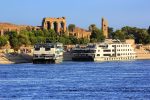
Boarding the ship where we will stay for the next 5 days and settling into our cabins. Lunch and Dinner.
In the afternoon we suggest you take a stroll in the Luxor market or walk along the newly built modern pier next to the Nile River.
Dinner and overnight stay.
3rd Day: Friday 20 February 2026 CRUISE BOAT
(HOT AIR BALLOON FLIGHT) – VALLEY OF THE KINGS – HATSEPSUT TEMPLE – COLLOSSES OF MEMNON / DISEMBARKATION – ESNA – EDFU
Note: Very early morning optional hot air balloon flight over the Valley of the Kings lasting approximately one (1) hour. Before sunrise transfer to the opposite West bank of the Nile from where we will admire Luxor from above, enjoying with complete tranquility the unique view of the most important archaeological site in the world!
Breakfast and departure for a guided tour of the Valley of the Kings, the necropolis on the west bank of the Nile, where over sixty tombs have been found. We will visit three of the most well-preserved tombs and admire the colorful funerary frescoes.
We continue with the three-story Epitaph Temple of Hatshepsut, one of the first female pharaohs of ancient Egypt (15th century BC). The masterpiece temple reflects to the maximum the architectural changes of the period, from the massive and distant to the elegant and accessible, but also of the special role and character of the queen.
We complete the West bank with our visit to the “Colossians of Memnon”, 15m tall, pharaoh statues that popular tradition associated with the mythical hero of the Trojan War.
Brief transition to perfume and essential oil processing laboratories where we will learn about their use. These products come from crops and their own distillery. Here we can also try karkade (hibiscus) tea. Return to our ship and lunch. Sail in the afternoon towards Esna, (Latopoli in Greek), to pass the “key of the Nile” or otherwise key of Esna, where the river level changes and we can observe the dam process.
We sail to Esna (Latopoli in Greek), to pass the “key of the Nile” or Esna key, where the river level changes and we can observe the damming process. We sail to Esna (Latopoli in Greek), to pass the “key of the Nile” or Esna key, where the river level changes and we can observe the damming process.
We continue sailing to Apollinopolis (Entfu), enjoying the wonderful African landscape and sunset. Arrival in Edfu, dinner and entertainment on board.
4th Day: Saturday 21 February 2026 CRUISE BOAT
EDFU (TEMPLE OF HORUS) – COM OMBO – ASWAN
Early morning departure for a guided tour of Edfu. Short transfer by coach to the most well-preserved Temple of God Horus in Egypt, built by the Ptolemies during the Hellenistic period, who identified it with Apollo. He was one of the most important gods of Egypt, had the form of a falcon, symbolized the sky and light and was mythologically connected with the Pharaoh dynasties. The inscriptions on the walls give important information about the language, myths, and religion during the Hellenistic period of Egypt, but also important scenes from the “Sacred Drama” of the conflict of Horus with Seth, which the Greeks compared and identified with the battle of Zeus with Typhon.
Return to the ship and breakfast. We sail between the green banks of the Nile, in the region of Thebaid towards Ombos (Komobo in Arabic).
Arrival in Komobo in the late afternoon, where we will visit the riverside temple that was built by the Ptolemaic dynasty and is an excellent example of Greek geometry. The temple is unique, not only because it is dedicated to two opposing and warring deities (Sobek and Horus), but also because the buildings have absolute and perfect symmetry around the central axis. We will also see embalmed crocodiles, but also a rare carved image believed to be the first representation of medical procedures for performing surgical operations.
Return to our ship and sail to Aswan. Dinner and overnight stay.
5th Day: Sunday 22 February 2026 CRUISE BOAT
ΑSWAN – SUN FESTIVAN IN ABU SIMBEL – FELUKAS – NUBIAN VILLAGE
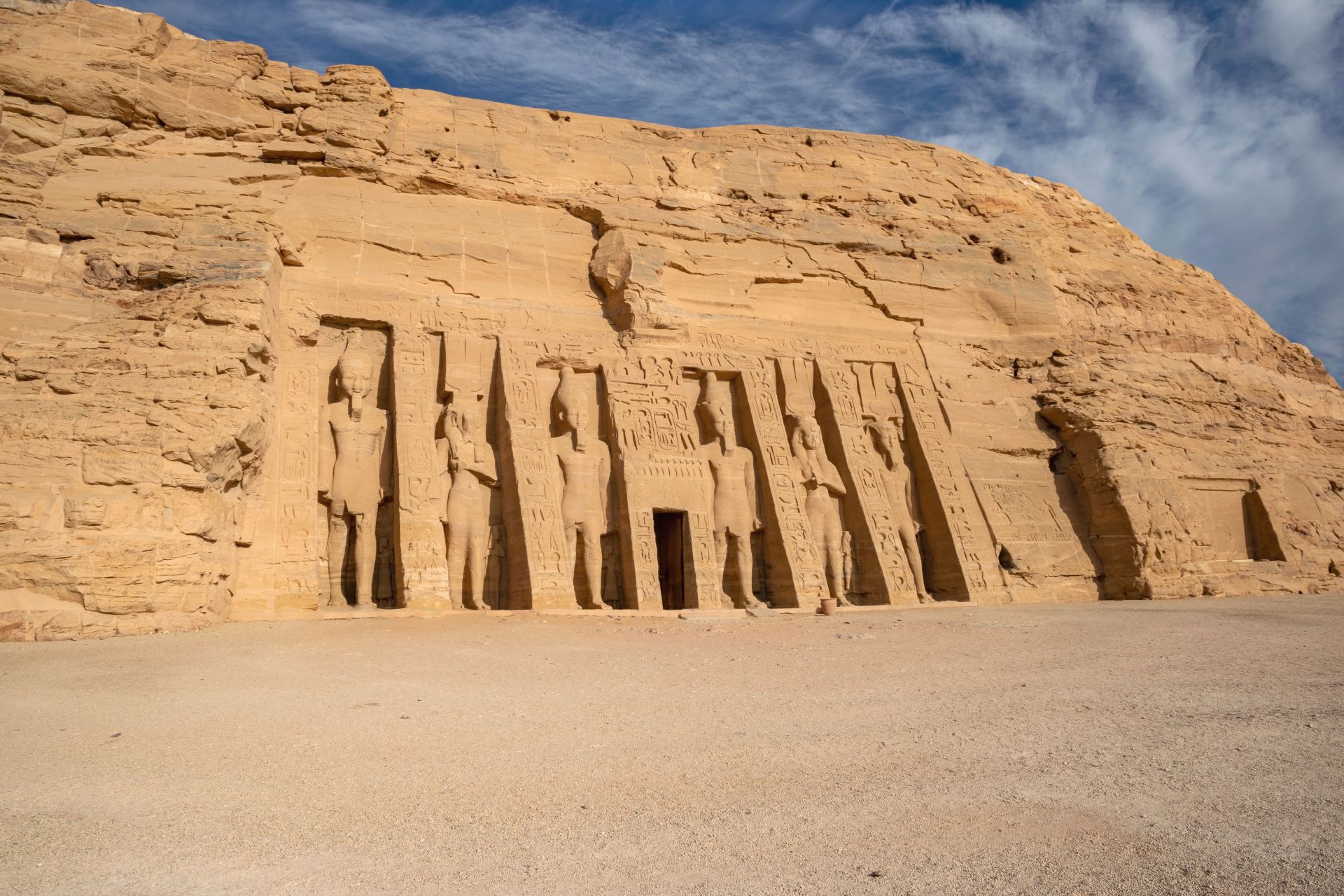
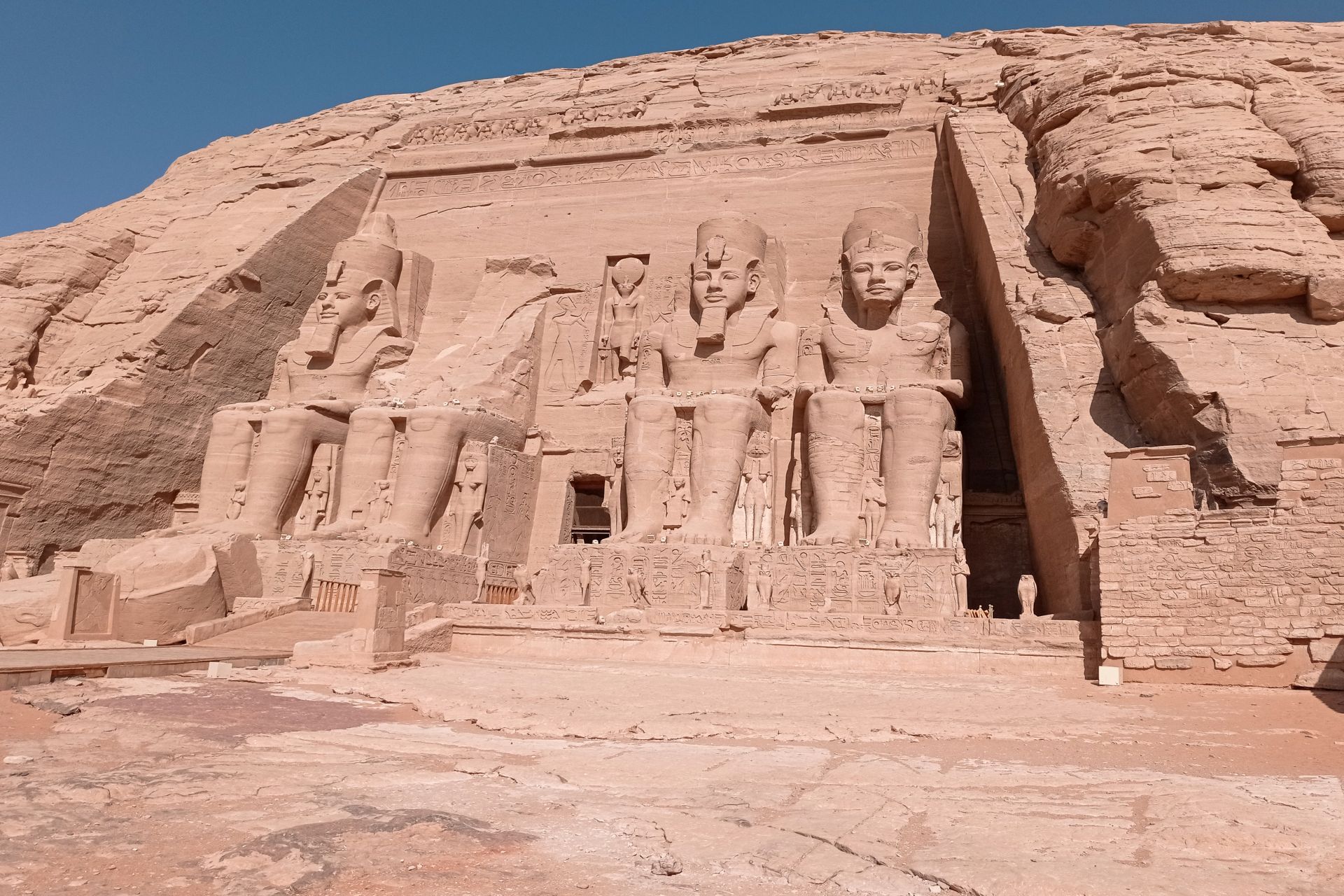
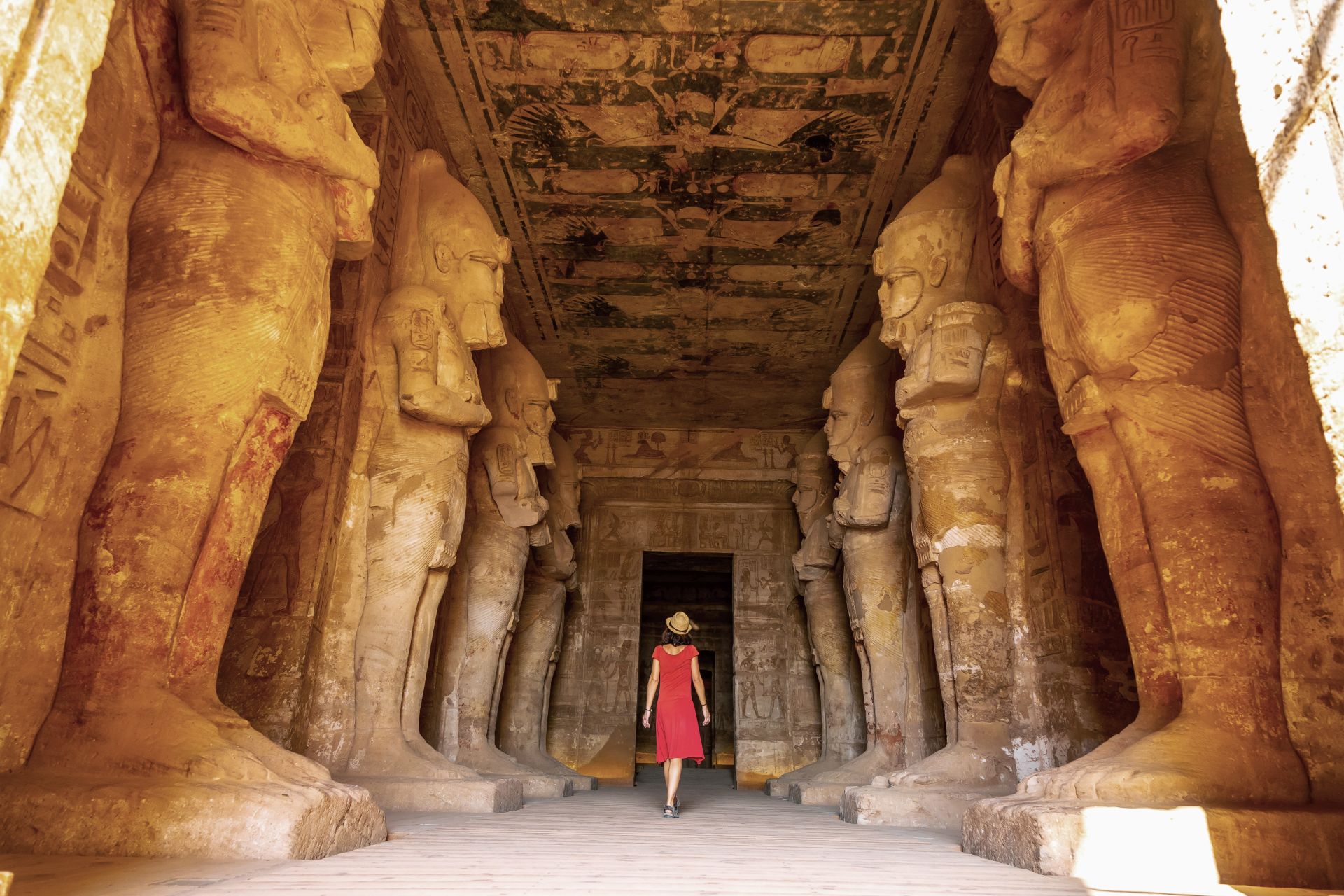
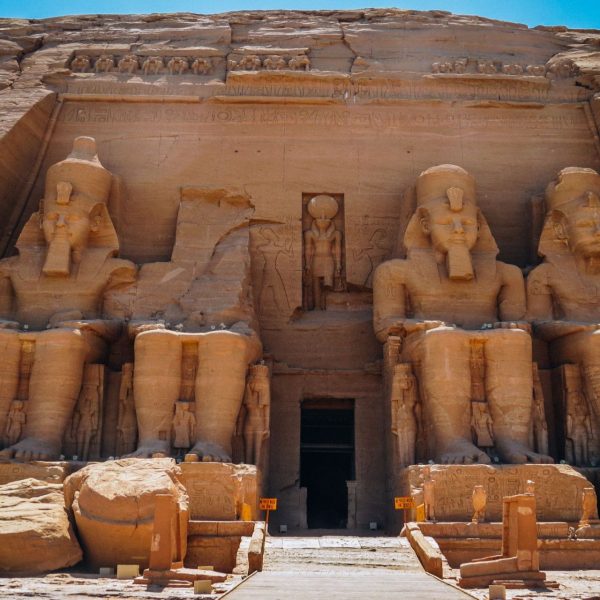
Departure shortly after midnight (approximately 01.00) and road transport for our guided tour of Abu Simbel and our participation in the Festival of the Sun. Abu Simbel is one of the most popular tourist destinations in Egypt (280+280 km). It consists of two majestic sacred temples dug into a pink sandstone hill. There was a complex of seven temples, two of which are preserved to this day, built in the 13th BC. century, in honor of the pharaoh Ramses the Great and his queen Nefertaris.
The Sun Festival at Abu Simbel is one of Egypt’s most spectacular natural and cultural phenomena. It happens twice a year, on February 22 and October 22, when the sun aligns with the Great Temple of Ramses II and illuminates its interior at its holiest point.
The first light of dawn enters the temple and illuminates successively the statues in the sanctuary: of Ramses II, Amun-Ra and Ra-Horaktis. Only the god Ptah remains in the dark, because he was god of the Underworld. The phenomenon lasts about 20 minutes, peaks around 06:00 and attracts many visitors. After the solar phenomenon, Traditional Nubian dances, Music events and outdoor markets and art exhibitions are held in the area.
Return at noon to our ship, lunch and rest. In the afternoon, a short sailing with the picturesque feluccas on the Nile (about 20-30) where we will admire the scenery and enjoy the tranquility of the river.
Afterwards, those who optionally visit the Nubian village will jump on a motorized boat for an unforgettable sailing towards the Nubian village, against the natural flow of the river. The rest will return by felucca to the ship.
Note: In the afternoon after the feluccas, optional visit to a Nubian village and optional camel ride in the desert. For those who wish, we will go by boat to a traditional Nubian village where we will visit a Nubian house and taste traditional tea, hibiscus and sometimes Nubian pie. We will have the opportunity to hold young crocodiles that the Nubians have in their homes as pets, but also to see older ones in swimming pools.
As we sail to the Nubian village, we will pass by Kitchener Island with its Botanical Gardens (a feast of tropical and subtropical plants and trees), Elephantine Island, and the Mausoleum of the Aga Khan, as well as the ultra-luxurious Old Cataract Hotel where Agatha Christie wrote her masterpiece Crime on the Nile! Free time in the village to browse the traditional shops before returning by boat to our ship.
Dinner and overnight stay.
6th Ημέρα: Monday 23 February 2026
ASWAN – FLIGHT TO CAIRO / ST. GEORGE – COPTIC HUNGING CHURCH – NATIONAL MUSEUM OF EGYPTIAN CIVILIZATION (NMEC) – KHAN EL KHALILI
Breakfast and we depart for Aswan airport. Flight with Egypt Air (MS-083) at 08.05 to Cairo. Arrival at 09.30.
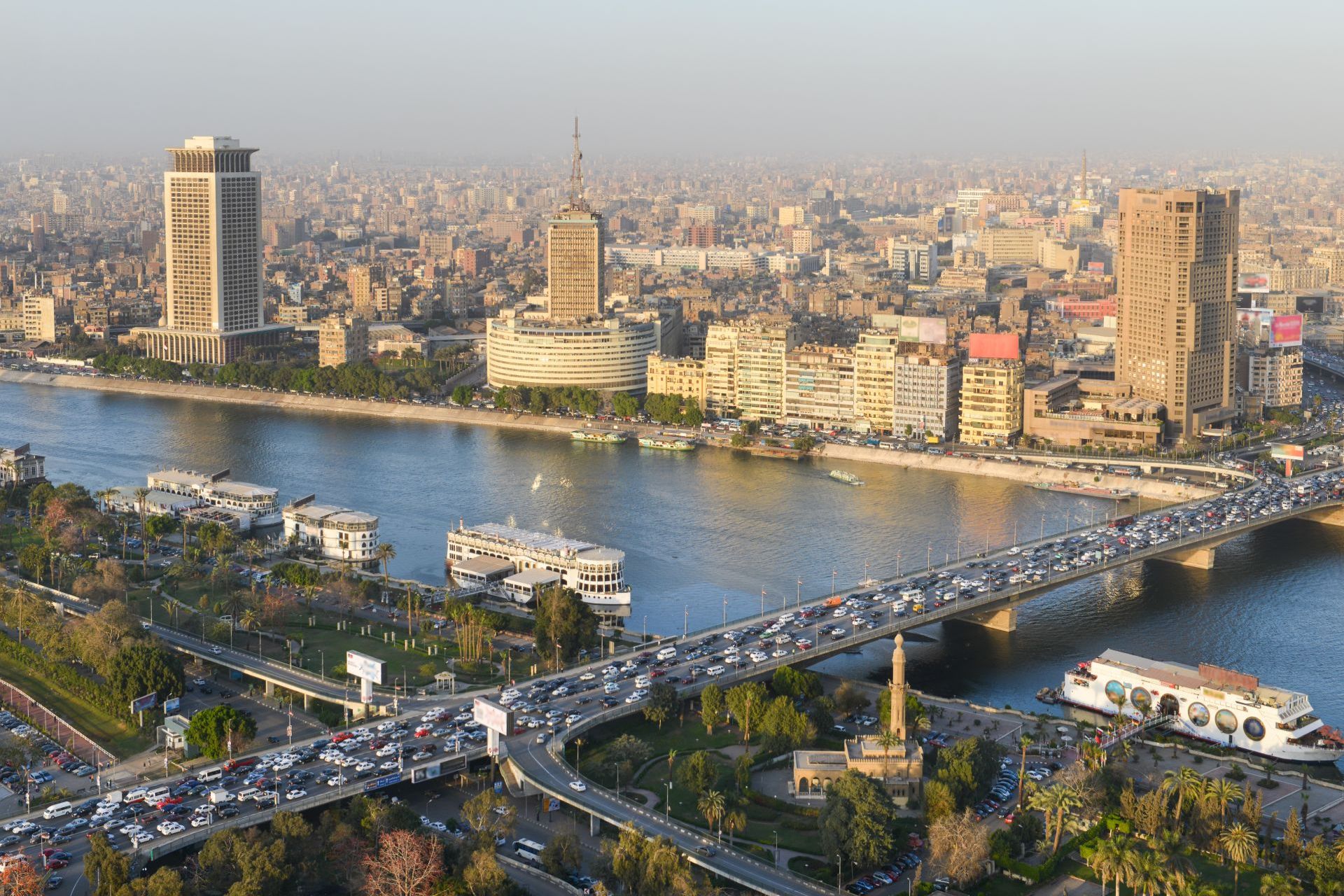
We will begin our acquaintance with the bustling city of North Africa, moving to Old and historic Cairo. It is located on the east bank of the Nile and in the area of ancient Memphis, in one of the most densely populated suburbs of Cairo, with monasteries, temples and cemeteries. We start from the Roman Fortress of Babylon, which is located near the point where the so-called Pharaonic Canal begins, which once connected the Nile with the Red Sea.
In the northern giant tower, is built the catholicon of the Greek Orthodox Monastery of the Patriarchate of Alexandria, dedicated to the memory of Saint George. We will visit the Temple and the recently renovated catacombs, where, among other things, we will see Byzantine paintings and the Nile meter, which once measured the level of the river. We conclude our visit with the Greek cemetery and the chapel, where, according to tradition, Our Lady took refuge with the Divine Child, during the period of persecution by Herod.
We continue to the nearby Hanging Church, where we will admire the art of wood carving on the ceiling.
Proceed to the Egyptian Museum of National Culture, located in Fustat, Cairo, is a modern museum dedicated to presenting the history and culture of Egypt from prehistoric times to the present day. It stands out because it covers all historical periods, highlighting the cultural continuity of the country.
The Central Exhibition includes thematic sections on daily life, society, technology, arts and religion, offering a comprehensive picture of the development of Egyptian culture. The most important part of the museum is the Hall of Royal Mummies, where the mummies of 20 pharaohs are displayed, which were brought there in 2021 in the spectacular “Pharaohs’ Golden Parade” ceremony.
The NMEC is an attractive and educational destination, which combines historical knowledge with modern exhibition techniques and offers the visitor a unique experience of getting to know the Egyptian heritage.
Lunch at a selected restaurant and we close our day with a visit and free time at the traditional Khan El Khalili market. The famous Khan el Khalili bazaar dates back to 1380, and took its name from the khan built by the emir Jaharks el Khalili.
Countless small shops and a multitude of merchants and peddlers with various items hawk their wares! Among other things, in Al Khalili you can find musical instruments, mother-of-pearl backgammon, silver jewelry with lapis lazuli and turquoise (Egypt is famous for), small marquetry furniture, very fine baqiria, alabaster ornaments, blown glass perfume bottles, hookahs, souvenirs, lamps, aromatic oils, sweets, dates, carpets, spices, tea or coffee with cardamom.
Return to our hotel and stay overnight.
7th Day: Tuesday 24 February 2026
GIZA: PYRAMIDS – SPHINX – GRAND EGYPTIAN MUSEUM of CAIRO (GEM)
Breakfast and we start our day with a visit to the New Archaeological Museum in Cairo (Grand Egyptian Museum Of Cairo – GEM) in Giza which is considered the new jewel in the crown of Egypt, but it is also one of the largest and most modern museums in the entire world. It houses a wealth of artifacts from ancient Egypt, including the treasures of Tutankhamun’s tomb, and many of the exhibits are on display to the general public for the first time.
The Great Egyptian Museum has 12 rooms with exhibits on ancient Egypt in its main galleries. The exhibits in the 12 rooms touch on issues related to society, religion and doctrine in ancient Egypt. The open-air rooms are arranged by dynasty and historical order and will display thousands of objects.
Periods exhibited in the main galleries include the Third Intermediate Period (ca. 1070-664 BC), the Late Period (664-332 BC), the Greco-Roman Period (332 BC-395 AD), the New Kingdom (1570 – 1069 BC), the Middle Kingdom (2030-1650 BC), and Old Kingdom (2649-2130 BC). We will be guided through exhibits dating back thousands of years and gain a deep understanding of the ancient culture of Egypt, observing the impressive collections and unique statues.
One of the highlights of the GEM is the exhibition of the entire Tutankhamun collection, with more than 5,000 objects, many of which will be presented to the public for the first time, in immaculate condition and with a modern museological approach. This museum was designed to be the largest museum in the world dedicated to a single culture — the ancient Egyptian!
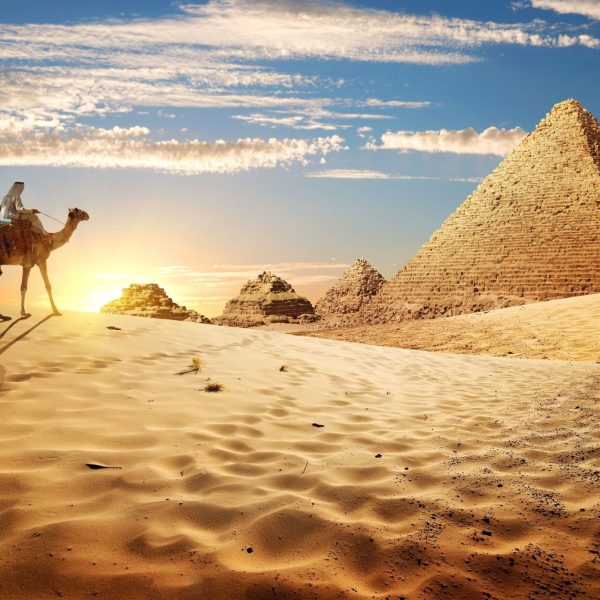
We continue to the archaeological site where the Pyramids are located. The Pyramids of Giza are among the oldest surviving buildings and are the most famous pyramids in the world. The construction dates back to 2580 BC. and are located in the Giza Necropolis. The complex is believed to have been used to bury pharaohs and was built by the fourth dynasty of Egypt.
We will walk and take photos at the archaeological site of the pyramids, one of the seven wonders of the ancient world. We conclude with the silent Sphinx representing the pharaoh Chephrina with the body of a lion, guardian of the necropolis of Giza.
Before our lunch, we will visit a Papyrus Institute to see the papyrus making process live — that is, how the papyrus plant is turned into “paper”/papyrus sheet.
The production process includes: cutting the stem of the plant, removing the outer skin, cutting the inner pulp (pith) into thin strips, laying the strips into a grid (one horizontal, one vertical), pressing/pressing the strips together to form a leaf — and finally drying.
Transfer to the hotel, overnight stay.
8th Day: Wednesday 25 February 2026
ALEXANDRIA / BIBLIOTHECA – KAVAFIS HOUSE – PATRIARCHATE – ST SAVVAS
Our breakfast will be early enough and an immediate departure to get to know the city founded by Alexander the Great, based on the Homeric narratives and which was the spiritual center of Hellenism, during the Hellenistic and Roman periods, but also the seat of the Second of the five Presbyterian Patriarchates from the Byzantine period to the present day.
Visit to the Patriarchate of Alexandria and All Africa, where we will see the Holy Church of the Annunciation of the Theotokos and we will be guided to the patriarchal museum with the great pharaonic finds, which came from excavations and dedications of the Greeks of Egypt. In the same place we will visit the patriarchal library, which has rare manuscripts as well as rare priestly relics.
Note: The museum and library of the Patriarchate are undergoing renovation and access may be limited. Meeting with the Patriarch of Alexandria Mr. Theodoros (if he is at his headquarters, otherwise with his representative).
Transfer to the Old Patriarchate and the historic Monastery of Agios Savvas of Igiasmenos, where is the stele on which, according to church tradition, St. Catherine was martyred.
Afterwards, we will visit the neighboring house of the world-famous Alexandrian poet Constantinos Cavafy, where his personal belongings are preserved. No matter how many words we write about him, they are not enough.
A born cosmopolitan, he lived in Alexandria, England, Constantinople and Athens and finally returned to the place of his birth, Egypt. We will go inside the house, which opened its doors again after the second renovation.
We will see the personal belongings and listen to a recording of Elli Lambeti reciting the excellent poem “THE CITY” by our beloved poet. We owe the first restoration of the great poet’s house years ago to Kostis Moskof.
Pass the New Library of Alexandria, which was built to commemorate the Hellenistic “Museum”, which included the largest library of the ancient world, but also laboratories, a zoological and botanical garden, guest houses and an observatory.
Lunch at a seaside restaurant and we continue with a panoramic tour of the waterfront with its imposing public buildings and hotels, on the Mediterranean coast, where we will also see the castle of Kaigit Bey (in place of the Lighthouse of Alexandria), the Hellenistic Community, the statue of the Unknown Soldier.
Departure for Cairo in the afternoon, arrival at our hotel after 20.00, rest and overnight stay.
9th Day: Thursday 26 February 2026
RETURN FLIGHT CAIRO – ATHENS
Breakfast and departure for Cairo International Airport.
Flight to Athens with Egypt Air (MS-747) at 10.10 with arrival at 12.15. (We continue with a flight to Thessaloniki or other airports in Greece).